How a Rural Queensland School Is Transforming Student Wellbeing — One Check-In at a Time

On 26 May, Switch4Schools co-founder and psychologist Phil Slade visited Hampden State School — a small rural school just north of Mackay on the Bruce Highway — to host a community event for parents, educators, and school leaders. The event was promoted through the school and across the Northern Highway Cluster Schools, a group of seven rural small schools in the region.
The response was overwhelmingly positive. Principal Judy Vidulich said attendees were genuinely engaged: "The participants really enjoyed the knowledge and experience that Phil brought to the presentation. I have been asked if I can organise another visit from Phil so he can build on the information he initially presented."
About the school
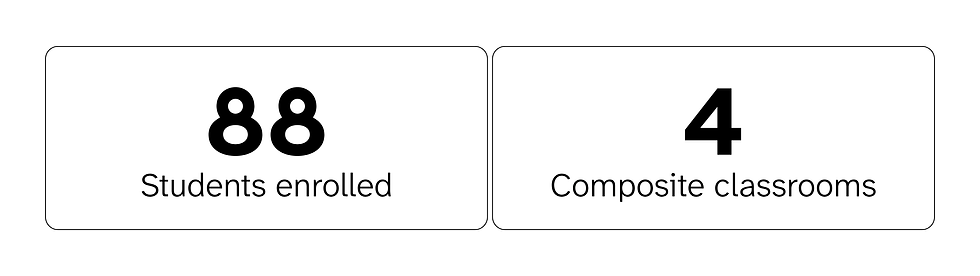
Hampden State School is a small, tight-knit rural school with composite classes spanning multiple year levels. Like many small schools, it faces the unique challenge of meeting the diverse social and emotional needs of students across a wide age range — all within a close community context.
During the event, we took the opportunity to sit down with Judy and ask her about Hampden State School's experience with Switch4Schools. We asked her to reflect on the features her school uses most, the difference she has seen in students, and what advice she would give to other small school principals considering making the switch. Here is what she shared.
Starting with a plan
Judy explains that Switch4Schools became part of a deliberate strategy following the Queensland Engagement and Wellbeing Survey:
"After participating in the Queensland engagement and wellbeing survey, we decided to make an action plan and Switch4Schools was a part of that plan. We wanted teachers to be a little more aware of how students' emotional and social wellbeing affected their learning and feeling safe, comfortable and confident in our school."— Judy Vidulich, Principal, Hampden State School
Check-ins: twice a day, less than five minutes
The school runs check-ins twice daily — at the start of the day and after the second break — making it one of their most consistent wellbeing practices.
"Check-ins take all of not even five minutes for all our students to do ... we do that at the beginning of the day and also after the second break because that's our longest play, and sometimes we find that students come back in feeling a bit frustrated after playing out in the playground, not getting fair game rules, that sort of thing. So it's nice to do a check-in in the afternoon so that we can have those conversations."— Judy Vidulich
The chat notifications feature has been especially valuable for students who need a little extra support. As Judy describes it, it gives them a discreet way to signal that they need to talk — without having to say it out loud in front of peers:
"Particularly for those students who we're already aware of [as needing] some little extra support in their wellbeing — they get that opportunity to give us a little silent 'hey, I need to chat about something today,' and then those students can chat to whichever staff member they are most comfortable with."
— Judy Vidulich
From "I'm angry" to "I felt frustrated because..."
One of the most visible shifts Judy has noticed is in how students describe their emotions — moving from broad labels to specific, nuanced language.
"Definitely. The older students have a lot more knowledge in the emotion they're feeling. So instead of saying they're angry, they actually say: 'I got really frustrated with such and such because this happened in the game' — or 'I'm feeling a little nervous, I really don't want to do it.' They're just letting us know they're nervous, and we can educate them that nervous is okay, it's a good emotion to have — it just means you are wanting to do your best — and then coach them through it, while still validating the emotion."
— Judy Vidulich
Evidence for conversations with parents
Switch4Schools also supports the school's student support processes. Judy notes that individualised reports help staff identify students who may need referrals — and give teachers something concrete to share with families:
"Switch4Schools is also great to identify students who require student support referrals, as you can get individualised reports for students to see daily patterns, weekly patterns — and then have conversations with parents about that as well, with the evidence on hand."
— Judy Vidulich
Advice for other small school principals
Judy's top tip
"Just jump in. Get the kids involved. Start with the emotional wheel and just start with the three levels of emotions so that children can get that language going — so they understand. Then when they are checking in, choose a level that's relevant, and then gradually introduce different language. We do social emotional lessons for half an hour each week with our class too, and that's looking at different aspects of social emotional wellbeing depending on their age level, and also depending on what's happening in the school context at the time."
Hampden State School is located on the Bruce Highway, north of Mackay, QLD. The Northern Highway Cluster Schools encompasses seven rural small schools in the surrounding region. Phil Slade is a co-founder of Switch4Schools and a registered psychologist.


